
Golden Chicken
32g
protein
220
calories
700mg
sodium
5g
fiber
Our nutrition · The noodle, annotated
Every ingredient, its share of the noodle, and why it’s there. Tap any one for the full story.
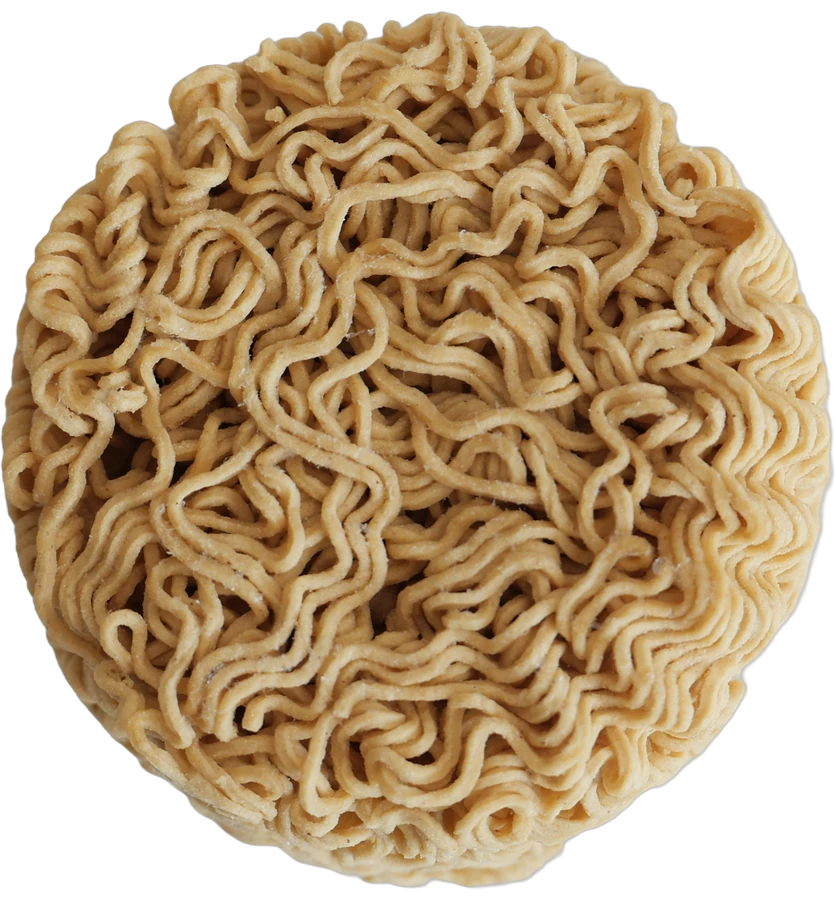
Traceable ingredients
Today every ingredient is made into noodles in one partner factory in Asia. We’re confirming where each ingredient itself is sourced, and it goes on its card as it’s confirmed.
Share of the dry noodle by weight, from our manufacturer’s specification. Seasoning and vegetables are separate and listed on each flavor’s label.
Ingredient 01 of 10 · Protein
39.7%
of the noodle, by weight
Ingredient 02 of 10 · Protein
23.6%
of the noodle, by weight
Ingredient 03 of 10 · Grain
12.5%
of the noodle, by weight
Ingredient 04 of 10 · Grain
10.2%
of the noodle, by weight
Ingredient 05 of 10 · Fiber
6.7%
of the noodle, by weight
Ingredient 06 of 10 · Texture & structure
4.5%
of the noodle, by weight
Ingredient 07 of 10 · Texture & structure
1.5%
of the noodle, by weight
Ingredient 08 of 10 · Texture & structure
0.6%
of the noodle, by weight
Ingredient 09 of 10 · Texture & structure
0.5%
of the noodle, by weight
Ingredient 10 of 10 · Texture & structure
0.2%
of the noodle, by weight
What we left out
About the noodle only. Each flavor’s seasoning has its own ingredient statement on the cup.
The noodle is dried with hot air. Most instant noodles are flash-fried in oil at 140 to 160°C.
No frying means no frying fat. There is no oil anywhere in the noodle's ingredient list.
Wheat gluten holds the dough together, so no egg is needed to bind it.
Drying is what keeps it. There is nothing in the list whose job is to extend shelf life.
The pale cream color is the flour. Nothing is added to make it look more golden.
There is no sugar in the noodle. What's on the label comes from the seasoning.
How it’s made
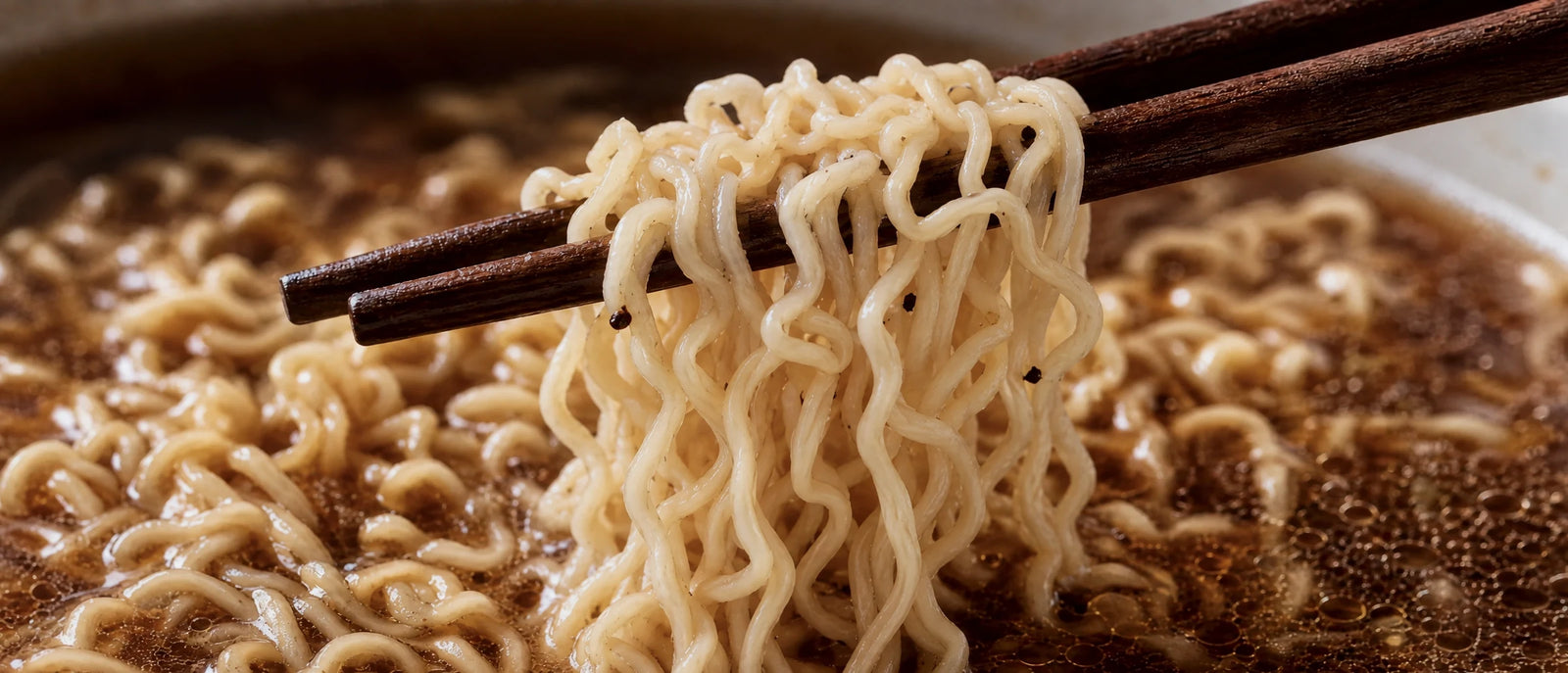
Most instant noodles are dried by frying them in oil at 140–160°C. Ours are dried with hot air, typically around 80°C for more than half an hour. Slower, and the reason the noodle is never greasy.
The ten ingredients and water become one dough.
The dough is pressed thin between rollers, where the gluten network forms.
Cut into thin strands and set in the open wave you see in the cup.
Steamed until cooked through.
Dried with hot air instead of oil. Slower, and the reason the noodle is never greasy.
Pressed into one round crimped disc sized for the cup.
Typical frying and air-drying temperatures: World Instant Noodles Association.
Compare the whole cup
Calories are only half the label. Divide protein by calories and the difference between a NOMI cup and a typical cup ramen is not close.
Per package, before added toppings. Typical cup ramen figure from a leading US chicken-flavor cup, 64 g serving. How to read a label ↗
Read it before you eat it.
Nutrition by flavor · per cup
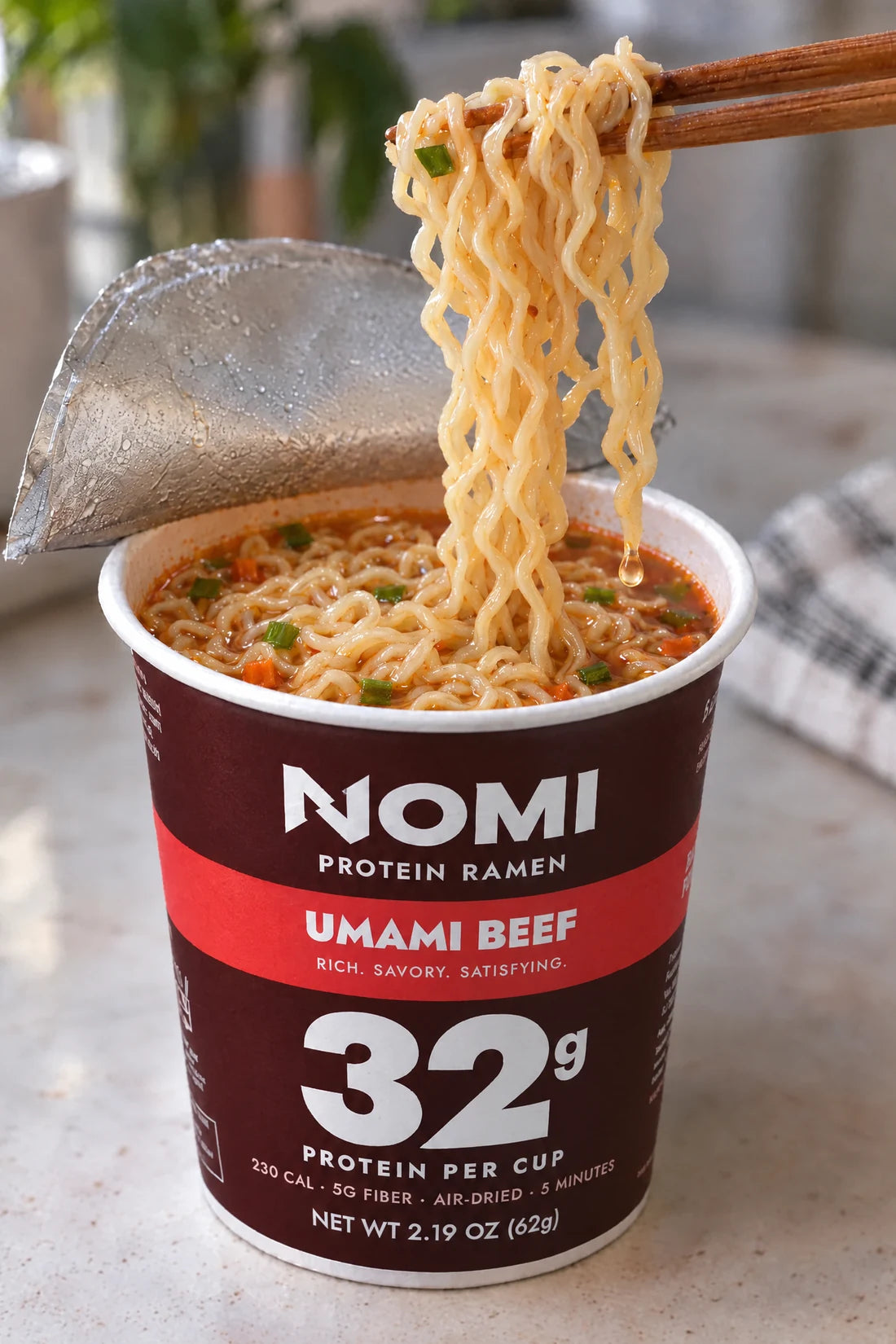
Every cup has 32g of plant protein. Calories, fiber and sodium vary by flavor. Figures are per cup, before any toppings you add. Contains wheat and soy. Check the label on your cup for the full allergen statement.
Golden Chicken
32g
protein
220
calories
700mg
sodium
5g
fiber

Umami Beef
32g
protein
230
calories
630mg
sodium
5g
fiber

Tokyo Curry
32g
protein
220
calories
660mg
sodium
4g
fiber

Black Garlic
32g
protein
260
calories
1,183mg
sodium
5g
fiber
The other number
Protein is the number everyone reads. Fiber is the one almost nobody hits. Most adults in the US fall short of the daily target, and instant ramen has historically been part of that problem, not the fix. A standard supermarket cup carries about 2 grams.
A NOMI cup carries 4 to 5 grams depending on the flavor, which is 14 to 18% of the Daily Value and enough to be a good source of fiber. It is not a topping and it is not dusted into the seasoning. It comes from pea fiber worked into the same dough that carries the protein.
Because it is in the noodle rather than the packet, the fiber is unaffected by what you do with the broth. Sodium and calories are a different question, and we do not have a tested drained-serving panel for those.
What we are not going to tell you
Four to five grams is a good source of fiber, not a high-fiber food. The line for that claim is 5.6 grams and we are not over it. We are working on the formula, and when we clear it you will read it on this page before you read it anywhere else.
| Flavor | Fiber | % Daily Value | Net carbs |
|---|---|---|---|
| Umami Beef | 5g | 18% | 16g |
| Golden Chicken | 5g | 18% | 16g |
| Tokyo Curry | 4g | 14% | 14g |
| Black Garlic | 5g | 18% | 20.5g |
| A typical supermarket cup | about 2g | 7% | — |
Daily Value for dietary fiber is 28g. Net carbs are total carbohydrate minus dietary fiber, taken from the same panel. Typical supermarket figure is from a leading US chicken-flavor cup, 64g serving. Check the label on your own cup.
Make sense of the label
Five grams per cup in Umami Beef and Golden Chicken, 5 grams in Black Garlic and 4 grams in Tokyo Curry. Against a 28g Daily Value that is 14 to 18%, which makes every flavor a good source of fiber. A typical supermarket instant cup carries about 2 grams. The fiber comes from pea fiber worked into the noodle dough, so it stays in the noodle whether you drink the broth or drain it.
See the fiber table ↓General guidance is about 14 grams for every 1,000 calories, which works out to roughly 25 grams a day for women and 38 for men. Most people get nowhere near it. There is no official upper limit, but increasing too fast is what causes discomfort, so the usual advice is to add about five grams a day, hold for several days, then step up again, and drink more water while you do. A NOMI cup is one of those steps. Daily Values on a label are general reference amounts, not a personal prescription, and your needs depend on your circumstances.
No. Daily Values are general label reference amounts. Your needs depend on your circumstances. A protein percentage should not be treated as a personalized prescription.
FDA guide to Daily Values ↗Everything you add contributes to the meal: sauces and seasonings can add sodium; eggs, tofu or meat add protein and other nutrients; vegetables can add fiber. The printed panel covers the cup as labeled.
It can, but we don’t have a tested drained-serving panel to quantify that change. Don’t subtract a guessed amount of sodium or calories from the label.
The noodle is the same ten ingredients in every flavor, listed at the top of this page. Each flavor’s seasoning and vegetables are printed on the side of its cup. Use the label on your actual cup when checking allergens.
Your next good meal
Three cups of Savory Umami Beef, on us. You cover shipping. One sample per person.
Try your first three. On us.
Free · you cover shipping
Three cups. On us.
Three cups of Savory Umami Beef, on us. You cover shipping. While the first boxes last.
Claim my free box
